

How the Filipino Diaspora Can Help Protect Philippine Coral Reefs
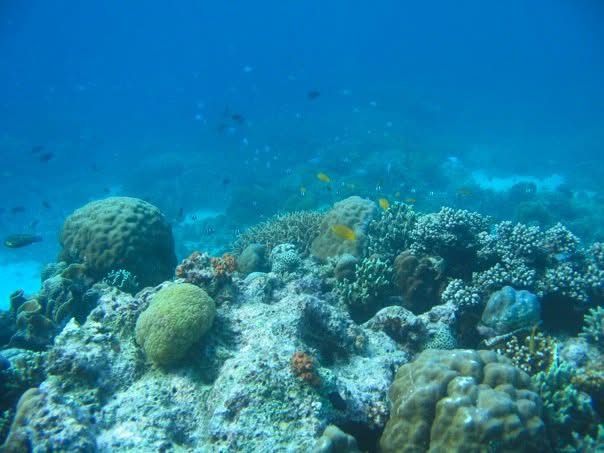
The Philippines is home to approximately 4,640 square kilometers of coral reef, making it the third-largest reef system in the world. These reefs harbor 468 known species of reef-building corals and more than 3,200 fish species. Scientists call the Philippines the “center of the center” of the Coral Triangle, the most biologically diverse marine region on Earth.
At the same time, an estimated 10 to 12 million Filipinos live and work outside the Philippines, spanning more than 100 countries. Filipino Americans alone number more than 4.6 million, making them the second-largest Asian American community in the United States. Millions more live in Saudi Arabia, the United Arab Emirates, Canada, Australia, the United Kingdom, Singapore, Japan, and across Southeast Asia.
These two facts are more connected than they might seem. The Filipino diaspora has the reach, the resources, and the cultural connection to play a meaningful role in protecting Philippine coral reefs — even from thousands of miles away.
Why Philippine Coral Reefs Need Global Support
Philippine reefs face serious and overlapping threats. Rising ocean temperatures have driven repeated mass bleaching events, with the 2023–2025 global bleaching episode damaging reefs worldwide. Overfishing, destructive fishing practices, sedimentation from coastal development, and plastic pollution add further pressure. According to the Philippine Journal of Science, only a small percentage of Philippine reefs remain in excellent condition, and many marine protected areas face an estimated 80 percent funding gap for effective management.
The scale of the challenge exceeds what local communities and the Philippine government can address alone. International conservation funding helps — the Global Fund for Coral Reefs, for example, has approved more than $10 million for programs across three Philippine marine protected area networks in the Verde Island Passage, Calamian Islands, and Tañon Strait — but much more support is needed.
This is where the global Filipino community enters the picture. With deep cultural ties to the Philippines and a proven tradition of supporting communities back home, overseas Filipinos are uniquely positioned to contribute to reef conservation.
The Reach and Resources of the Filipino Diaspora
Overseas Filipinos already make an enormous economic contribution to the Philippines. In 2025, cash remittances sent home by overseas Filipino workers reached a record $35.63 billion, according to the Bangko Sentral ng Pilipinas. That figure represents about 7.3 percent of the Philippine GDP.
The United States accounts for the largest share of remittances, at nearly 40 percent, followed by Singapore, Saudi Arabia, and other countries. These financial flows sustain millions of Filipino families and help drive the domestic economy.
But remittances are only part of the story. Overseas Filipinos also bring international professional experience, global networks, multilingual communication skills, and exposure to environmental movements in their host countries. Filipino communities abroad have a long tradition of collective support — the spirit of bayanihan, or communal cooperation — that already powers disaster relief, education funds, hometown associations, and church-based giving.
Extending that spirit to marine conservation is a natural step, and it does not require a large financial commitment to make a real difference.
Six Ways Overseas Filipinos Can Support Reef Conservation
1. Donate to Credible Reef Conservation Organizations
Direct financial support remains one of the most effective ways to help from abroad. The key is choosing organizations that are transparent about how funds are used and that work with local communities.
Look for nonprofits that publish financial information, name their science partners, and explain their methods. Effective reef conservation organizations typically invest in coral nurseries, marine protected area management, community training, and long-term monitoring — not just one-time planting events.
Reef Without Borders is preparing for its first science-led coral restoration mission in Cebu, working with trained local divers and scientific monitoring protocols. You can learn more about how we plan to use donations at our transparency page.
2. Raise Awareness in Your Community
One of the most valuable things overseas Filipinos can do costs nothing at all: talk about Philippine coral reefs. Many people, even within the Filipino community, do not know that the Philippines sits at the epicenter of global marine biodiversity or that its reefs face such urgent threats.
Share credible information through social media, community organizations, church groups, cultural associations, and professional networks. When more people understand what is at stake, conservation gains both public support and political attention.
3. Support Community-Based Marine Conservation
Some of the most successful reef conservation work in the Philippines happens at the community level. Local fisherfolk associations manage marine sanctuaries. Coastal communities patrol no-take zones. Women-led cooperatives develop sustainable livelihoods that reduce fishing pressure on reefs.
Organizations like the Coastal Conservation and Education Foundation (CCEF) have worked with hundreds of communities across the Visayas and Mindanao for decades. The Saving Philippine Reefs expeditions have monitored reef health in locations including Southern Cebu. Supporting these grassroots efforts — through donations, volunteer coordination, or knowledge-sharing — strengthens the foundation that all reef conservation depends on.
4. Practice Responsible Tourism When Visiting
Many overseas Filipinos return to the Philippines regularly to visit family. If your travels take you to coastal areas, your choices as a visitor matter. Choose dive operators and resorts that follow reef-safe practices. Avoid touching or standing on corals. Use reef-safe sunscreen and avoid single-use plastics near the water.
Tourism revenue can be a powerful incentive for reef protection when communities see that healthy reefs attract visitors. By choosing responsible operators and speaking up about reef safety, you help reinforce the economic case for conservation.
5. Participate in Citizen Science
You do not need to be a marine biologist to contribute useful data. The Philippine Coral Bleaching Watch, a volunteer network supported by the Philippine government’s Department of Environment and Natural Resources, allows trained divers to submit bleaching reports and reef condition photographs. Since its founding in 2010, more than 100 citizen scientists have submitted over 500 reports, helping researchers track bleaching patterns across the archipelago.
If you are a certified diver visiting the Philippines, organizations like Reef Check offer EcoDiver training that equips volunteers to conduct standardized reef health surveys. Even snorkelers and beachgoers can contribute observations that help build a clearer picture of reef conditions.
6. Advocate for Marine Policy
Overseas Filipinos can also support reef conservation through advocacy. The Philippines has strong marine protection laws, including the National Integrated Protected Areas System (NIPAS) Act and the Expanded Fisheries Code, but enforcement depends on political will and adequate funding.
Dual citizens, voters abroad, and members of Filipino civic organizations can voice support for marine conservation funding, enforcement of fishing regulations, and expansion of marine protected areas. Marine protected areas in the Philippines have shown real results when adequately managed, but many still operate with insufficient resources.
Bayanihan for the Ocean
The concept of bayanihan — neighbors lifting a house together, carrying a shared burden as a community — is one of the Philippines’ most enduring cultural values. It already drives disaster relief after typhoons, funds scholarships for students in home provinces, and builds churches and community centers across the diaspora.
Applying that same spirit to ocean conservation is not a stretch. Philippine coral reefs sustain the food supply, livelihoods, and coastal protection of more than 1.5 million Filipino fisherfolk and their families. They support an ecosystem so rich in life that scientists have described the Philippines as the most biodiverse marine country on Earth per unit of area.
Protecting those reefs is not only an environmental cause. It is a way to protect the communities, the coastlines, and the natural heritage that connect overseas Filipinos to home — no matter how far away they live.
Frequently Asked Questions
Can I help protect Philippine coral reefs if I live outside the Philippines?
Yes. Financial donations to credible conservation organizations, raising awareness in your community, responsible travel choices, citizen science participation, and advocacy for marine policy all contribute meaningfully — regardless of where you live. The economic value of Philippine coral reefs makes their protection a priority that benefits millions of people.
How do I know if a reef conservation organization is trustworthy?
Look for organizations that publish audited financial statements, explain their scientific methods, name their local partners, and report measurable outcomes. Charity evaluators like Candid (formerly GuideStar) and Charity Navigator provide independent assessments. Be cautious of organizations that guarantee specific environmental results without evidence.
What is the Coral Triangle, and why does it matter?
The Coral Triangle is a roughly triangular area of tropical ocean waters spanning the Philippines, Indonesia, Malaysia, Papua New Guinea, Timor-Leste, and the Solomon Islands. It contains 76 percent of all known coral species and more than 2,000 species of reef fish. The Philippines sits at the heart of this region and is often described as the “center of the center” of marine biodiversity. Learn more about the state of Philippine coral reefs.
How does Reef Without Borders work with communities in Cebu?
Reef Without Borders is preparing for its first coral restoration mission at Kontiki, Mactan, Cebu, planned for Q4 2026. The approach relies on trained local divers, scientific site selection, and long-term monitoring. We are an early-stage nonprofit committed to transparent documentation of every step. Read about our mission.
Comments are closed.