

Why Your Support Matters: The Real Impact of Reef Restoration Donations
Why Your Support Matters
By Clarisa Strohmeyer, Founder | Updated 17 September 2026 | 6 min read
There is a particular kind of donation fatigue that sets in when you have been asked to give to environmental causes for long enough. The causes are real. The need is genuine. But somewhere between the urgency of the fundraising email and the vague promise of impact, the connection between the money you give and the thing that changes gets lost. Reef Without Borders was designed specifically to close that gap.
Quick Answer: What Does My Donation to Reef Without Borders Actually Do?
Your donation will fund our first coral restoration mission at Kontiki, Mactan, Cebu, planned for Q4 2026. A $100 gift sponsors a coral fragment through the Adopt-A-Coral programme. We have not yet run a funded mission, so what we can promise is a report on what happened, including what did not work, rather than a guaranteed set of numbers.
Key takeaways
- A $100 gift sponsors a coral fragment for our first restoration mission at Kontiki, Mactan, Cebu.
- That mission has not happened yet. Everything on this page is what we intend to do, not what we have done.
- We will report what we find after the mission, including corals that do not survive.
- Coral restoration supports a reef. It does not substitute for reducing the pressures that damage reefs in the first place.
The Story of a $100 Donation
🔗
Read More
Choose how you want to make an impact today →
A $100 gift to the Adopt-A-Coral programme will be recorded and allocated to our first restoration mission at Kontiki, Mactan, Cebu. Before any coral goes into the water, the site has to be looked at properly. That is where the work starts, and it is slower and less photogenic than most fundraising suggests.
Fragments are attached to prepared substrate, and the site and date are recorded. We intend to film our first mission and publish the footage. What we can show you afterwards will depend on what the day actually produces, which is why we are not promising a format for it in advance.
You will get a report after the mission describing what was done and what was found. We plan to return to the site to check how the corals are doing, and to publish what we find, including the losses. Survival is the number that matters, and it is the one most organisations are quietest about.
Why the Numbers Matter Beyond the Individual Coral
🔗
Read More
See how your donation will become action in the water →
A single coral fragment does not restore a reef. But the data from that fragment, its species, its survival rate, its growth trajectory, combined with the data from every other fragment planted at every other Reef Without Borders site, will build a picture of reef recovery in Cebu that we intend to publish openly, so that scientists, conservation managers and other restoration practitioners can use it.
The Coral Triangle is the most biodiverse marine region on earth. The data Reef Without Borders will collect at its restoration site in Cebu is intended to contribute to the global understanding of what reef restoration can achieve in this region, under current climate conditions, using locally available species and locally trained teams. That knowledge is worth more than the sum of the corals planted.
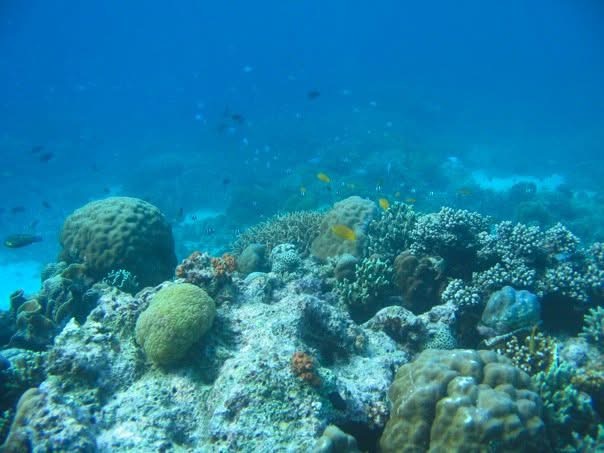
The Human Side of Reef Conservation
Behind every restoration dive is a team of people whose livelihoods, heritage, and futures are tied to the health of these reefs. Dindo Paquibot grew up on Mactan Island, Cebu. He learned to dive in the same waters where he now conducts restoration work. His professional career, from his first divemaster certification in 2003 to his 20 years of guiding, instructing, and reef work, has been built on and around the Philippine reef system. When we fund a dive, we are not just buying coral. We are supporting a local expert who knows these reefs better than anyone else, and whose commitment to their recovery is personal.
You do not have to be a diver to help protect the reefs. You just have to decide that they are worth protecting. We will do the diving.
What happens if my donated coral does not survive?
We will document and report it. Coral mortality is part of restoration ecology, and understanding which species and which sites have lower survival rates is valuable data. We will not hide mortality in our reports.
Can I choose where my coral is planted?
Not yet. Our first mission is at a single site, Kontiki in Mactan, Cebu, chosen by our Director of Dive Operations on ecological grounds. If we work at more sites later, we will say so.
How will I know my donation was used?
We will report after each mission rather than once a year, and we will publish what we find whether or not it went well.
Your support funds field operations, documentation, and the administration that keeps the work accountable. Reef Without Borders received its federal 501(c)(3) determination from the IRS on 5 June 2026, effective retroactively to 22 May 2026. Contributions are tax-deductible to the extent allowed by law.
Fund the Mission
Sources and further reading
- Coral restoration: a systematic review of current methods, successes, failures and future directions — Boström-Einarsson et al., PLOS ONE, 2020.
- Coral Reef Restoration Monitoring Guide — NOAA National Centers for Coastal Ocean Science, 2020.
- Standards for Charity Accountability — BBB Wise Giving Alliance.
Clarisa Strohmeyer is the Founder and Executive Director of Reef Without Borders, a Houston-based nonprofit dedicated to coral reef restoration in the Philippines and across the Indo-Pacific. Learn more at reefwithoutborders.org/
Comments are closed.