

Marine Protected Areas in the Philippines: How Communities Are Saving Their Reefs
Why Marine Protected Areas Matter in the Philippines
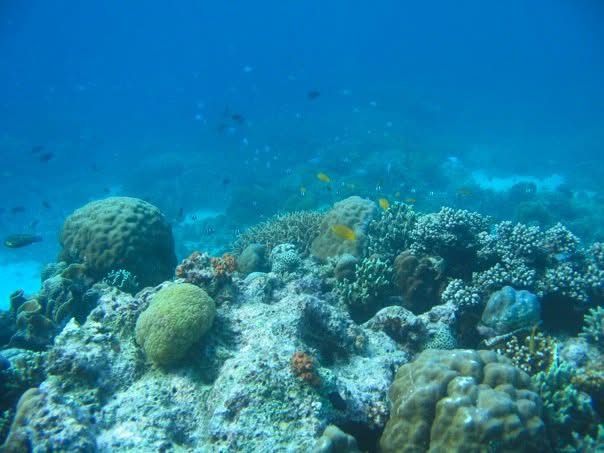
The Philippines sits at the heart of the Coral Triangle, a region spanning six nations that holds more than 76% of the world’s shallow-water reef-building coral species and 37% of its reef fish species. With roughly 22,000 square kilometers of coral reef — the third most extensive reef system in the world — the Philippines is one of the most important places on earth for marine conservation.
But these reefs are under serious pressure. Overfishing, destructive fishing practices, and climate change have taken a heavy toll. Coral cover across the Philippines has declined by roughly a third in the past decade. An estimated 75% of fishing grounds are overfished, according to assessments cited by Oceana Philippines.
Marine protected areas (MPAs) are one of the most effective tools for reversing this decline. By setting aside sections of reef where fishing is restricted or prohibited, MPAs give coral and fish populations the chance to recover — and the Philippines has become a global leader in this approach.
What Is a Marine Protected Area?
A marine protected area is a clearly defined section of ocean where human activity is regulated to protect marine life. In the Philippines, most MPAs include a no-take zone — a core area where all fishing is prohibited — surrounded by a buffer zone where only non-destructive fishing methods are allowed.
The science behind MPAs is straightforward. When fishing pressure is removed from a section of reef, fish populations grow larger and more abundant. Mature fish produce more eggs, and larvae drift beyond the protected zone to replenish surrounding reefs. This process, known as spillover, means that well-managed MPAs can actually improve fishing catches in adjacent waters.
MPAs also protect the reef structure itself. Without anchors, trawl nets, or bleaching-weakened corals being further damaged by fishing gear, reefs have a better chance of recovery.
The Philippines’ MPA Network: A Pioneering Approach
The Philippines has more than 1,500 marine protected areas, making it one of the most MPA-dense nations in the world. What distinguishes the Philippine approach is that the vast majority — more than 90% — are community-managed and sit within municipal waters.
This model traces back to 1974, when Sumilon Island in Cebu province became the country’s first marine sanctuary. Marine biologist Dr. Angel Alcala established a no-take zone covering a quarter of the island’s reef. That experiment led to one of the first scientific demonstrations that even small protected areas can benefit nearby fisheries.
The Philippine legal framework supports this community-led model through several key laws:
The Local Government Code gives municipalities the authority to create their own marine ordinances and enforce fishing regulations within their waters. The Philippine Fisheries Code of 1998 encourages municipalities to designate at least 15% of their waters as fish reserves or sanctuaries. The National Integrated Protected Areas System (NIPAS) Act, expanded in 2018, protects larger marine seascapes at the national level, currently covering 32 marine protected areas.
The Visayas region — which includes Cebu, Negros, and Bohol — has the highest concentration of community-managed MPAs in the country, with more than 560 sanctuaries representing roughly a third of the national total.
Success Stories: What MPAs Can Achieve
Apo Island: The Global Model
Apo Island, a small community of about 1,000 people in Negros Oriental, became an MPA in 1982. Before protection, dynamite fishing and muro-ami (a destructive method using weighted nets smashed against reefs) had severely depleted fish stocks.
After the community established a no-take zone and banned destructive practices, the results were remarkable. The sanctuary now shelters more than 650 fish species and over 400 coral species. Fish biomass increased significantly, catches improved in surrounding waters, and tourism revenue provided a new livelihood for the community. Apo Island’s success has inspired approximately 700 fishing villages across the Philippines to establish their own sanctuaries.
Sumilon Island: The Importance of Sustained Protection
Sumilon Island, located off the southern tip of Cebu, provides an equally important lesson — about what happens when protection lapses. After the reserve was established in 1974, fish populations thrived. But when it was reopened to fishing between 1983 and 1985, populations of large predatory fish dropped rapidly. After protection was reinstated, recovery was slow. It took until 1999 for large predators to regain their average pre-1983 adult size, and fish biomass rose nearly 30% from its low point only after six years of continuous protection.
Sumilon demonstrates that marine protection must be sustained and consistent. Political changes, enforcement gaps, or shifting priorities can undo years of recovery.
Challenges Facing Philippine MPAs
Despite the country’s impressive number of protected areas, experts estimate that only about a third of Philippine MPAs are well-managed. Several persistent challenges limit their effectiveness.
Enforcement gaps. Many MPAs are described as “paper parks” — protected in name but not in practice. Budget constraints and personnel shortages make consistent patrol coverage difficult, especially for smaller municipalities. Oceana Philippines documented more than 40,000 commercial fishing vessel entries into municipal waters in 2020, including more than 1,400 detected in larger MPAs.
Small size and limited coverage. Most Philippine MPAs are small, community-level sanctuaries. No-take zones cover an estimated 0.5% of municipal waters, protecting only about 2.7% to 3.4% of the country’s total coral reef area. Less than 1% of municipal waters fall under MPAs, far short of the Fisheries Code’s 15% target.
Illegal fishing. Illegal fishing accounts for an estimated 27% to 40% of total catch in the Philippines. At least 30,000 municipal fishing vessels are unregistered, making monitoring and enforcement even more difficult.
Climate change. Even the best-managed MPAs cannot fully protect reefs from ocean warming and coral bleaching. Typhoons also cause direct physical damage — in Lapu-Lapu City on Mactan Island, Cebu, Typhoon Odette in 2021 damaged more than half of the coral reefs within the city’s 11 MPAs.
Governance complexity. Overlapping authority between local governments and the Department of Environment and Natural Resources (DENR), along with conflicts between conservation and fisheries policies, can create confusion about who is responsible for enforcement and management.
The Road to 30×30: What Comes Next
The Philippines has committed to the global 30×30 target, pledging to protect 35.03 million hectares — about 15.91% — of Philippine seas by 2030 as part of the Kunming-Montreal Global Biodiversity Framework. The country is a member of both the High Ambition Coalition for Nature and People and the Global Ocean Alliance.
Progress is happening. In 2025, the Panaon Island Protected Seascape in Southern Leyte was designated under the Expanded NIPAS Act, protecting approximately 60,000 hectares of ocean that includes reefs with coral cover roughly three times the national average. Eleven additional protected area bills are pending in the Philippine Senate.
These national-level protections complement rather than replace community-managed MPAs. The Philippine model works best when national policy supports local action — giving communities the legal authority, technical guidance, and financial resources to protect their own reefs.
Community Guardians: Marine Conservation in Cebu
Cebu province illustrates both the challenges and the potential of this model. The Tañon Strait Protected Seascape, a 518,000-hectare marine area shared between Cebu and Negros, is one of the largest protected seascapes in the Philippines.
At the local level, coastal communities are actively protecting their reefs. In Lapu-Lapu City on Mactan Island, 11 locally declared MPAs are maintained by a dedicated Coastal Resource Management team. About 20 members patrol the shoreline and smaller islets in shifts, guarding against illegal fishing, cleaning marine debris, and monitoring reef health. Their work is supported by the Philippine Coast Guard, Maritime Police, and Bureau of Fisheries and Aquatic Resources.
Reef Without Borders is preparing for its first coral restoration mission at Kontiki, Mactan, Cebu — a site selected for its restoration potential. Conservation efforts like marine protected areas and coral restoration work together: MPAs protect existing reef structure and fish populations, while restoration helps rebuild reef areas that have been damaged.
How You Can Help Protect Philippine Coral Reefs
Marine protected areas depend on consistent support, both from the communities that manage them and from people around the world who care about ocean conservation.
Learn about the reefs you visit. If you dive or snorkel in the Philippines, ask whether the site is within an MPA. Follow reef-safe practices — avoid touching coral, maintain buoyancy control, and use reef-safe sunscreen.
Support organizations working on the ground. Effective marine conservation requires sustained funding for patrols, monitoring equipment, community training, and scientific research. Support Reef Without Borders as we prepare for science-led coral restoration in Cebu.
Spread awareness. Many people do not realize that the Philippines is one of the most important places on earth for marine biodiversity. Sharing accurate information about Philippine reef conservation helps build the broader support these efforts need.
Frequently Asked Questions
How many marine protected areas are in the Philippines?
The Philippines has more than 1,500 marine protected areas, the majority of which are small, community-managed sanctuaries established by local government units. In addition, the national government protects larger marine seascapes through the Expanded NIPAS Act.
Do marine protected areas really work?
Research consistently shows that well-managed MPAs increase fish biomass, support coral recovery, and improve catches in surrounding waters through spillover. At Sumilon Island in Cebu, fish biomass rose nearly 30% after six years of sustained protection. However, effectiveness depends on consistent enforcement and adequate management.
What is the biggest threat to Philippine coral reefs?
Philippine reefs face multiple threats, including overfishing, illegal and destructive fishing, pollution, and climate-driven coral bleaching. Coral cover has declined by approximately a third in the past decade. MPAs address some of these threats but cannot solve problems like ocean warming on their own.
What percentage of Philippine waters are protected?
Despite having more than 1,500 MPAs, the actual coverage is limited. No-take zones protect an estimated 2.7% to 3.4% of the country’s total coral reef area. The Philippines has committed to protecting about 15.91% of its seas by 2030 under the global 30×30 framework.
How can I support marine conservation in the Philippines?
You can support coral reef conservation by donating to credible organizations working on restoration and protection, practicing reef-safe diving and snorkeling, reducing plastic use, and sharing information about Philippine marine conservation with your community.

Comments are closed.