

Why the Philippines? The Coral Crisis Closest to My Heart
Why the Philippines?
The Coral Crisis Closest to My Heart
By Clarisa Strohmeyer, Founder, Reef Without Borders | May 27, 2026 | 7 min read
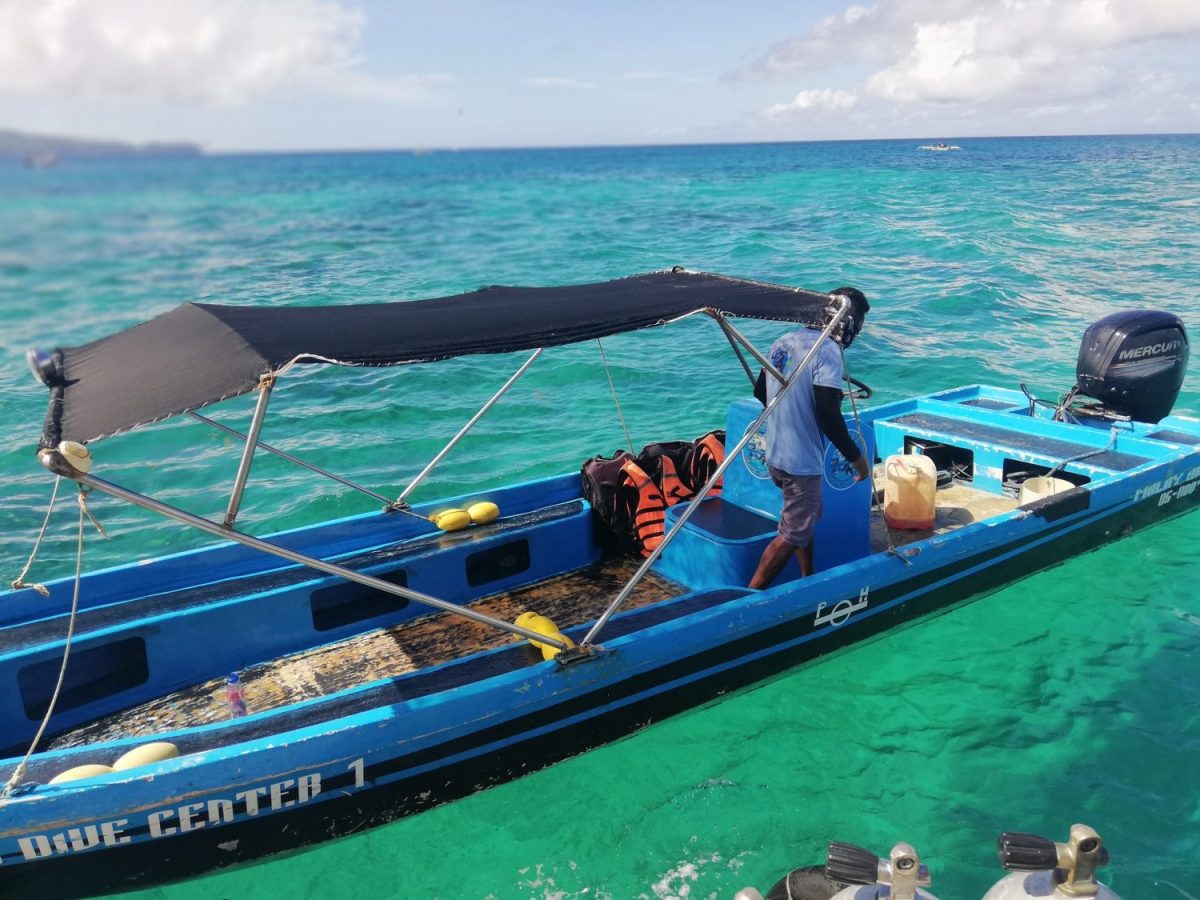
I grew up hearing the ocean before I ever saw it. My family talked about the sea the way other families talk about home. And when I finally descended below the surface for the first time, 25 years ago, I understood why. The reefs of the Philippines were not just beautiful. They were alive in a way that changed everything I thought I knew about this world.
That memory is what drives every dive we do at Reef Without Borders. And it is what makes the current state of those reefs so urgent.
The Philippines sits at the center of the Coral Triangle, the most biodiverse marine region on Earth. It contains roughly 27,000 square kilometers of coral reef, supporting over 2,000 species of reef fish and 500 species of coral. It is also one of the most threatened reef systems in the world. Reef Without Borders begins here because the need is urgent, the biodiversity is irreplaceable, and this is where our founder’s heart has always been anchored.
The Coral Triangle: Earth’s Most Biodiverse Ocean Region
The Coral Triangle spans six countries: the Philippines, Indonesia, Malaysia, Papua New Guinea, the Solomon Islands, and Timor-Leste. It covers just 1.6% of the world’s ocean surface. Yet it contains 76% of all known coral species and 37% of all reef fish species on the planet.
Scientists call it the Amazon of the seas. In the Philippines alone, reef fisheries support an estimated 1.5 million fisherfolk and their families. The stakes are not just ecological. They are human.
What Is Happening to Philippine Reefs Right Now
The threats are layered and compounding. No single cause tells the full story.
- Climate change is driving ocean warming and acidification, bleaching corals at an accelerating rate. The Philippines experienced severe bleaching events in 2016, 2019, and again in 2024.
- Destructive fishing practices, including dynamite and cyanide fishing, have caused irreparable structural damage to reef formations in many regions.
- Coastal development, runoff, and sedimentation have smothered coral polyps across large areas near urban centers.
- Overfishing has disrupted the ecological balance that healthy reefs depend on, removing the grazers and predators that keep reef ecosystems functional.
“I have hovered over places I dove 20 years ago and had to check my compass to confirm I was in the same location. That loss is not abstract. It is personal. And it is reversible, with the right intervention, at the right time, by people who know what they are doing.”
Why Documentation Comes First
Before you can restore a reef, you have to know what you have. That is the foundational principle behind Reef Without Borders. Our model is built on systematic underwater documentation: photo and video surveys, species identification, substrate condition assessments, and long-term monitoring of specific reef sites.
We partner with local dive communities, conservation organizations, and scientific institutions to build a picture of reef health that is accurate, accessible, and actionable. Documentation creates accountability. It creates a baseline. It creates the kind of evidence that funders, policymakers, and restoration teams need to act.
The Expansion Plan: Beyond the Philippines
The Philippines is where we begin. But the Indo-Pacific is where we are going. Our long-term mission spans the broader Coral Triangle region, including Indonesia, Malaysia, and the Solomon Islands, where reef systems face similar pressures and local conservation capacity is critically underfunded.
Every site we document adds to a body of knowledge that belongs to the global conservation community, not just to one organization. That is what borderless means in practice.
What Your Support Makes Possible
Every dollar we raise funds dive operations, documentation equipment, coral nursery maintenance, and the content creation that brings these reefs to audiences who have never been underwater. We operate on a lean, mission-first budget with 60% of every dollar going directly into field operations and reef restoration.
We believe that people protect what they love, and they love what they can see. Our job is to make these reefs visible, to bring the ocean to the surface for everyone who cares about what happens to it.
“From the vibrant waters of Cebu to the distant shores of the Indo-Pacific, our journey continues. One dive at a time.”
The reefs cannot wait. Neither can we.
Clarisa Strohmeyer is the Founder and Executive Director of Reef Without Borders, a Houston-based nonprofit dedicated to coral reef restoration in the Philippines and across the Indo-Pacific. Learn more at reefwithoutborders.org/
Comments are closed.